
7 Signs of an Unhealthy Scalp and How to Improve Scalp Health

When was the last time you gave your scalp some attention? Not your hair, but the skin underneath it. We spend so much time moisturizing, styling, coloring, and protecting our hair that we sometimes forget where it all begins.
Your scalp plays an important role in maintaining healthy hair. When something isn’t quite right, it often gives you little warning signs. Maybe you’ve noticed more flakes than usual, an itch that won’t go away, or hair that seems thinner around certain areas.
The tricky part? These changes are easy to overlook or dismiss as normal. Recognizing the signs of an unhealthy scalp can help you understand when your hair care routine needs adjusting. It can also help you recognize when professional attention may be necessary.
At Look Beyond Beauty, Certified Trichologist Marcey Grant believes healthy hair care goes beyond the products sitting on your bathroom counter. Understanding your scalp, lifestyle, and overall wellness is just as important.
Let’s explore seven common warning signs and what you can do to give your scalp the care it deserves.


Signs of an Unhealthy Scalp
People often miss or ignore early signs of an unhealthy scalp. Mostly because the skin is hidden under hair, and mild symptoms like itching or light flaking are easy to brush off as a bad hair day or a generic reaction to a new shampoo. Here are a few symptoms to watch out for.
1. Itchy Scalp
Sometimes, your scalp itches more than it should. An occasional itch is nothing unusual. But if you’re constantly reaching up to scratch your head, your scalp might be trying to tell you something. Persistent itching can happen for several reasons. Dryness, product irritation, dandruff, and certain skin conditions are all possible causes. Sometimes, even your favorite shampoo or styling product can become part of the problem. And here’s something worth remembering. Scratching might feel good for a moment, but repeated scratching can irritate your skin even more.
How to improve scalp health: Start by reviewing the products you’re using. Choose a gentle shampoo and avoid heavily fragranced products if your scalp feels sensitive. Rinse thoroughly to remove residue. If the itching continues, consider a professional scalp assessment. A dermatologist can evaluate persistent itching and determine whether medical treatment is needed.
2. Excessive Flaking
Nobody enjoys discovering little white flakes on their favorite black shirt. However, those flakes aren’t always caused by the same problem. Some people experience flaking because their scalp is dry. Others may have dandruff, which is often associated with seborrheic dermatitis. These conditions can look similar but may require different approaches.
That’s why grabbing the first dandruff shampoo you see isn’t always the best solution. Marcey Grant encourages individuals to understand what’s happening with their scalp before repeatedly switching products. Knowing the difference between dryness and dandruff can make your hair care decisions much easier.
How to improve scalp health: Use products appropriate for your scalp condition. Medicated dandruff shampoos may help control dandruff, while gentle cleansing can benefit dry, sensitive skin. Avoid picking at flakes or aggressively scrubbing your scalp. If flaking becomes severe or persistent, seek a dermatologist’s evaluation.
3. Scalp Oiliness
Does your hair look greasy shortly after shampooing it? Do your roots feel heavy even when the rest of your hair looks clean? Your scalp naturally produces sebum, an oil that helps protect your skin and hair. That’s perfectly normal. However, excessive oil can leave your scalp feeling uncomfortable and contribute to buildup.
Several factors influence oil production, including hormones, genetics, and individual skin characteristics. Styling products can also make oily roots feel even heavier. And contrary to popular belief, having an oily scalp doesn’t mean you’re doing something wrong.
How to improve scalp health: Establish a cleansing routine that works for your scalp and hair type. Some people benefit from more frequent shampooing, while others need less. Focus shampoo on the scalp rather than coating every strand. Also, avoid applying heavy oils directly to an already oily scalp. The goal isn’t to eliminate natural oils, but rather to keep your scalp clean and comfortable.
4. Scalp Inflammation
Your scalp shouldn’t constantly feel sore, irritated, or uncomfortable. If you’ve noticed redness, burning, tenderness, or painful areas, don’t ignore them. These symptoms may indicate irritation, inflammation, or an underlying scalp condition.
Sometimes the culprit is something simple, like a hairstyle that’s pulling too tightly. Other times, chemical treatments, allergic reactions, or skin conditions may be involved. Protective hairstyles deserve special attention here. Braids, weaves, ponytails, and extensions should never create ongoing pain or excessive tension. A beautiful hairstyle shouldn’t come at the expense of your scalp health.
How to improve scalp health: Give your scalp a break from tight hairstyles and irritating products. Avoid additional chemical treatments until you understand what’s causing the discomfort. If you notice persistent redness, sores, swelling, or painful bumps, schedule an appointment with a dermatologist. Early attention is especially important when inflammation occurs alongside hair loss.
5. Thinning Hair
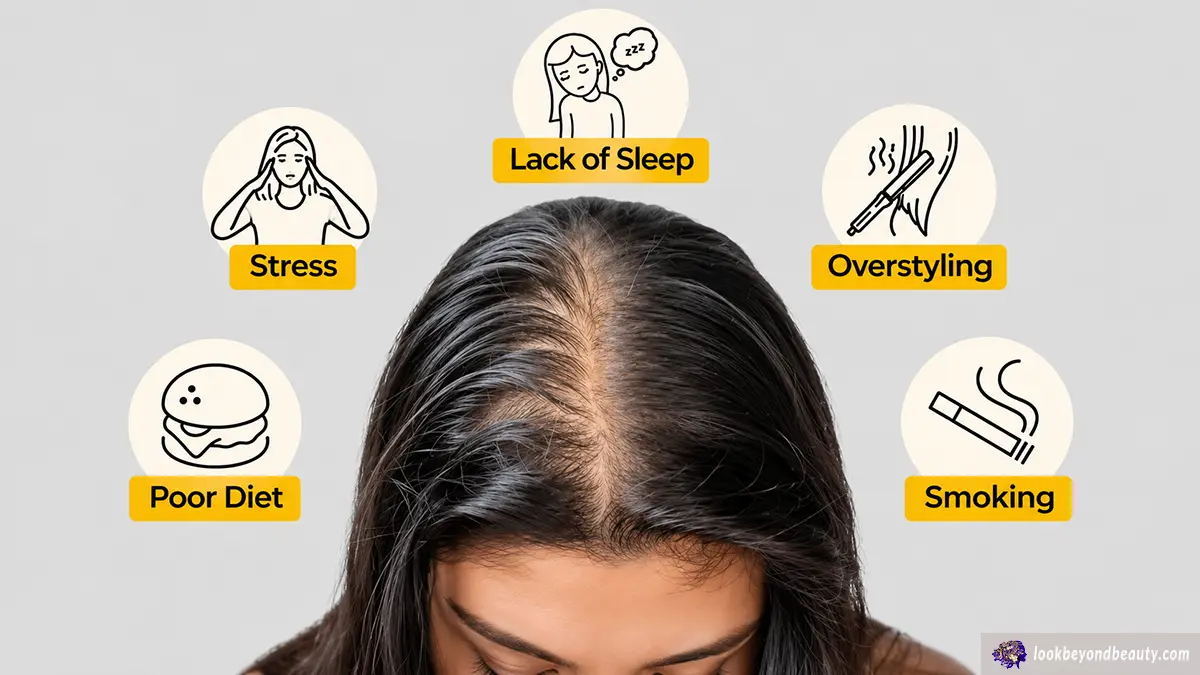
Finding a few strands in your brush or shower drain is normal. Hair naturally moves through growth, resting, and shedding cycles. However, noticeable thinning, widening parts, bald patches, or sudden increases in shedding could be a sign of an unhealthy scalp.
Hair loss can happen for many reasons. Genetics, hormonal changes, stress, nutritional deficiencies, certain medications, and medical conditions can all play a role. Some forms of hair loss also involve inflammation or damage around the hair follicles. That’s why it’s important not to assume every hair loss concern can be solved with a new growth oil.
How to improve scalp health: Pay attention to when the changes began and whether you’re experiencing other scalp symptoms. Review your styling habits, especially anything that creates tension around your hairline. Maintain a balanced diet and avoid starting supplements without understanding whether you need them.
At Look Beyond Beauty, Marcey Grant’s Trichology and Hair Wellness Program includes detailed hair and scalp assessments. Her approach considers hair care practices alongside lifestyle and wellness factors. A dermatologist can investigate unexplained hair loss, diagnose medical causes, and recommend appropriate treatment.
6. Scalp Buildup
Let’s talk about something many of us have experienced. You shampoo your hair, style it beautifully, and reach for a little extra product throughout the week. Before you know it, you’ve layered leave-in conditioners, gels, creams, sprays, and oils onto your hair.
While these products can help achieve your favorite styles, too much residue can accumulate on your scalp. Buildup may leave your roots feeling coated, greasy, or uncomfortable. It can also make cleansing less effective. And no, applying another layer of oil isn’t necessarily going to fix it.
How to improve scalp health: Keep your routine simple and choose products based on your actual needs. Cleanse your scalp thoroughly, especially when using multiple styling products. An occasional clarifying shampoo may help remove stubborn residue, provided it suits your hair and scalp.
Remember, more products don’t automatically mean healthier hair. Sometimes your scalp simply needs a fresh start.
7. Tight, Dry Scalp
Have you ever shampooed your hair and immediately felt like your scalp was pulling or tightening? That uncomfortable sensation may be a sign of an unhealthy scalp, and needs attention. Dryness can develop when the skin loses moisture or becomes irritated. Harsh cleansers, environmental conditions, frequent heat exposure, and certain skin conditions may contribute.
You might notice tightness, rough patches, itching, or fine flakes. But here’s the important part. Not every dry-feeling scalp needs more oil. Sometimes the real issue is irritation or a skin condition that requires a different approach.
How to improve scalp health: Choose gentle cleansing products and avoid excessively hot water. Consider scalp-friendly moisturizing products formulated for sensitive or dry skin. Limit harsh treatments and pay attention to how your scalp responds. If dryness persists despite changes to your routine, a professional evaluation can help clarify the cause.
How to Improve Scalp Health Beyond Your Hair Care Products
Now that you recognize the warning signs, let’s talk about the bigger picture. Healthy scalp care isn’t only about what you apply externally. Your daily habits and overall health can influence your hair and skin, too. At Look Beyond Beauty, Marcey Grant takes a holistic approach to beauty and wellness. As a Certified Trichologist, Cosmetologist, and Beauty & Wellness Coach, she understands that hair concerns don’t always exist in isolation.
Here are a few everyday habits worth focusing on:
- Eat a balanced diet. Protein, iron, zinc, and other essential nutrients support normal hair growth and overall health.
- Manage stress. Significant stress can contribute to certain types of hair shedding and may aggravate some skin conditions.
- Get adequate sleep. Consistent rest supports your overall health and wellness.
- Protect your scalp. Avoid excessive tension, harsh chemicals, and prolonged sun exposure without appropriate protection.
- Be consistent with cleansing. Find a shampooing schedule that keeps your scalp comfortable without unnecessary irritation.
- Pay attention to changes. Notice persistent itching, flaking, tenderness, or unusual shedding rather than waiting for symptoms to become severe.
You don’t need an elaborate ten-step routine to care for your scalp. Consistency, gentle practices, and understanding your individual needs can make a meaningful difference.
When Should You See a Trichologist for Scalp Problems?
Sometimes, changing your shampoo or adjusting your styling routine isn’t enough. If you’ve tried different products without improvement, it may be time to look beyond the surface. A trichologist specializes in understanding hair and scalp concerns. Through assessments and discussions about your routine, hair history, and lifestyle, a trichologist can help you better understand factors that may be affecting your hair.
At Look Beyond Beauty, Marcey Grant brings more than 25 years of beauty industry experience to her work. Her Trichology and Hair Wellness Program takes a personalized approach to hair and scalp wellness. Rather than assuming everyone needs the same treatment, Marcey considers individual concerns, styling practices, nutrition, and lifestyle habits.
This approach can help clients develop healthier hair care routines and make more informed decisions. It’s also important to understand that trichology doesn’t replace medical dermatology. A dermatologist should evaluate persistent inflammation, infections, painful scalp symptoms, scarring, or unexplained hair loss.
Healthy Hair Begins With Paying Attention to Your Scalp
Your scalp does a lot more than hold your hair in place. It’s living skin that deserves the same attention you give your face and body. The good news? You don’t have to wait until you’re experiencing significant hair problems to start caring for it.
Understanding the signs of an unhealthy scalp gives you an opportunity to recognize changes early and make appropriate decisions about your routine. Whether you’re dealing with dryness, excessive oil, persistent itching, or unexpected shedding, the first step is understanding what your scalp needs.
At Look Beyond Beauty, Marcey Grant believes beautiful hair and overall wellness go hand in hand. Her personalized approach helps clients look beyond temporary fixes and develop habits that support long-term hair and scalp care.
Ready to give your scalp the attention it deserves? Schedule a hair consultation with Marcey Grant at Look Beyond Beauty. Discover how personalized guidance can help you better understand your scalp and care for your hair with confidence.
In Beauty & Wellness,
Marcey, Certified Health Coach & Trichologist
DISCLAIMER: The content in this blog is for informational purposes only. And not intended to diagnose, treat, cure, or prevent any medical condition or replace your healthcare professional’s advice and guidance. If you suspect a medical condition, please seek medical attention immediately.
You may also enjoy reading: Feed-in braids hd lace wig
Related Posts

Human Hair Extensions: How to Get Natural-Looking Hair Without Damage
Many women want longer, fuller hair without sacrificing…
A Hair Consultation Can Reveal More Than You Think About Your Hair Health
Have you ever looked in the mirror and…

Dry Scalp vs. Dandruff: How to Tell the Difference
You notice flakes on your shoulders and immediately…